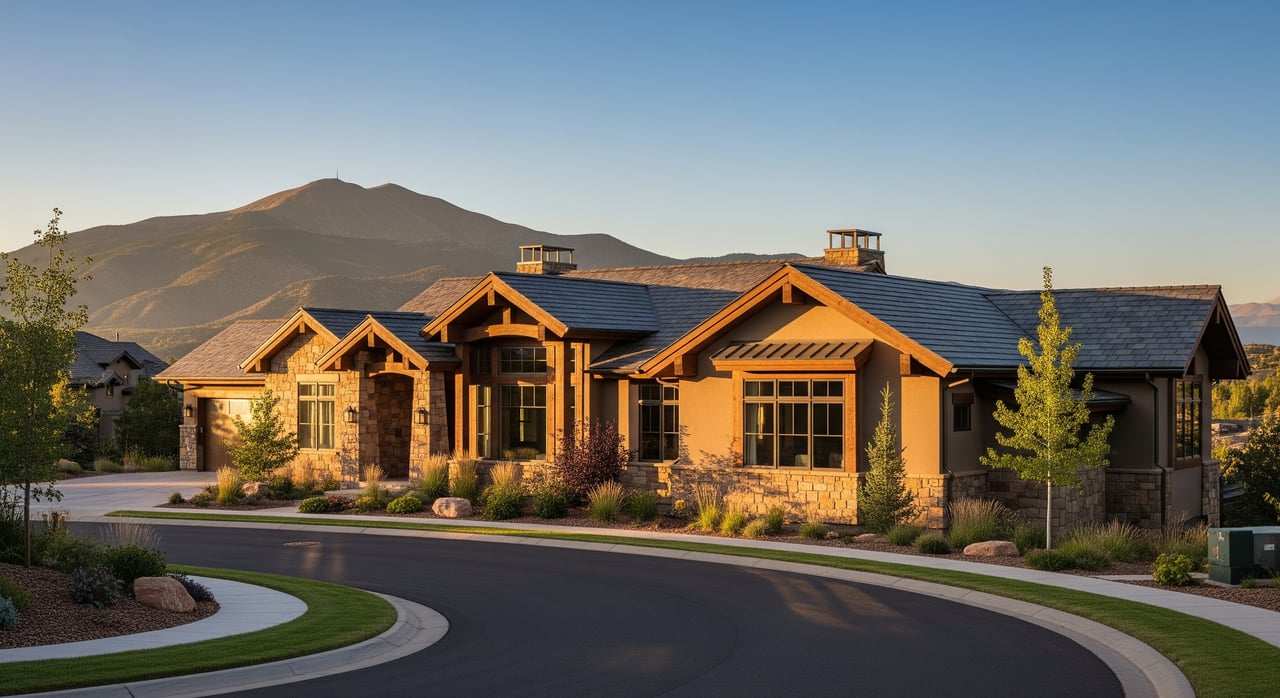
Choosing between Cordera and Flying Horse can feel like picking a lifestyle as much as a neighborhood. You want the right mix of home style, amenities, commute, and long-term value without surprises from HOAs or hidden costs. In this guide, you’ll get a clear, side-by-side look at both communities so you can focus on what matters most to you. You’ll also get a practical checklist to use on your next tour. Let’s dive in.
Quick take: Cordera vs Flying Horse
Cordera: A master-planned community known for parks, trails, community events, and a central recreation focus. Amenities are typically included through the HOA and designed for day-to-day convenience. You’ll find a range of newer single-family homes and an organized neighborhood feel. Verify whether new construction is ongoing and how that could affect inventory and pricing options.
Flying Horse: A prestige community often associated with The Club at Flying Horse, featuring private golf, dining, fitness, and pools. Some enclaves offer gated living and custom or semi-custom homes. The private club is separate from the HOA, and membership terms and costs vary. Confirm whether membership is optional or required in your chosen enclave before you buy.
Both sit on the north side of Colorado Springs, with access to I-25 and major corridors like Interquest Parkway and Powers Boulevard. Your day-to-day rhythm, cost structure, and preferred amenities will likely determine the better fit.
Homes and build status
In both neighborhoods, you’ll primarily see single-family detached homes with a range of layouts designed for Colorado living. Cordera tends to lean toward a strong mix of production builders across phases, which can create consistent streetscapes and cohesive architectural guidelines. Flying Horse includes a wider share of semi-custom and custom products in certain enclaves, along with production offerings in others.
If you’re a move-up buyer looking for multiple living areas or 4-plus bedrooms, you’ll find plenty of options in both. In Flying Horse, luxury finishes and larger lots are more common in specific sections. In Cordera, you’ll often see newer design packages and efficient floor plans tied to the latest phase releases.
Ask your agent to confirm whether new construction is still active in your target area. Ongoing builds can be great for choice and potential incentives, but they also add future resale competition. On the resale side, verify typical days on market and price positioning with current MLS data to time your move-out and move-in effectively.
HOAs, fees, and rules
Both communities are master planned, so expect a master association and, in some cases, sub-associations for specific enclaves. These organizations maintain common areas, enforce architectural guidelines, and manage amenities. Fees, rules, and services included can vary by address.
Use this must-ask list before you write an offer:
- CC&Rs, Bylaws, and Rules and Regulations
- Current operating budget and year-to-date financials
- Reserve study and history of special assessments
- Fee schedule for master and any sub-association, plus what’s included
- Architectural review process and timelines
- Rental policies, pet policies, and enforcement procedures
- Meeting minutes from the last 6–12 months, plus any disclosed litigation
If you’re evaluating Flying Horse, separate the HOA from The Club at Flying Horse. Club amenities and dues are independent from HOA fees. Membership may be optional in many areas, but confirm for your specific enclave. If club membership is important, request current membership tiers, initiation fees, and monthly dues so you understand total ownership costs.
Amenities comparison
Cordera amenities: Typically include community parks, trail networks, playgrounds, and a community center or recreation facilities that serve residents. Programming often features seasonal events and activities that make it easy to connect with neighbors. Verify access procedures, any guest policies, and whether there are resident cards or pass fees.
Flying Horse amenities: Centered on a private club environment. Expect a golf-centric lifestyle supported by private dining, fitness, pools, and social programming. Some pockets may be gated. Not all amenities are included in HOA dues, since the club is a separate entity. Review club materials, costs, and any waitlists to ensure availability aligns with your plans.
If you prefer public-style neighborhood amenities included in HOA fees, Cordera often fits that model. If you value private club perks and a prestige feel, Flying Horse is worth a closer look.
Location and access
Both communities offer strong access on the north side of Colorado Springs. I-25, Interquest Parkway, North Academy, and Powers Boulevard are key corridors that shape commute times to local employers and daily errands.
To compare real-world convenience:
- Test peak-hour drive times to your workplace using navigation apps.
- Map the nearest grocery, pharmacy, urgent care, and big-box retail for each address you’re considering.
- Ask about any planned transportation projects that could change traffic flow or connectivity.
Your specific home site within each community can meaningfully influence travel times, so test from the actual block whenever possible.
Schools and options
School attendance areas change over time and vary by address. If proximity to schools is a priority, verify exact boundaries with the local school district and the Colorado Department of Education. Review objective performance data and available programs that matter to your household.
If walkability to a particular campus is important, check sidewalk continuity, crossing points, and distance during your tour. Ask your agent to confirm if any boundary adjustments are in discussion so you can plan with a longer time horizon in mind.
Lifestyle and community feel
Community character often reflects the amenity set and housing mix. In Flying Horse, many buyers are drawn to the private club culture, social calendar, and the option for gated enclaves. In Cordera, buyers often appreciate the public community amenities, neighborhood events, and a park-and-trail lifestyle that supports everyday convenience.
Neither approach is better across the board. The right fit comes down to how you like to spend your time. If golf, private dining, and a club network are central to your routine, Flying Horse deserves attention. If you want easy access to shared parks, playgrounds, trail loops, and a community center, Cordera may feel like home.
Resale and value drivers
Resale performance in master-planned communities is shaped by several factors:
- Amenity quality and upkeep. Well-maintained parks, trails, and club facilities support buyer demand.
- HOA governance and reserves. Strong financials and clear rules reduce surprise costs and preserve curb appeal.
- Neighborhood reputation. Consistent landscaping standards and architectural cohesion make listings more competitive.
- School attendance zone stability. Many buyers verify school boundaries, so changes can affect future demand.
- Supply and new phases. Active building can be positive for choice but may compete with resales in the near term.
Ask your agent to pull 3–5 years of MLS data for each neighborhood. Seeing trend lines for price appreciation, days on market, and the mix of new versus resale will help you plan both your purchase and your eventual exit.
Your on-site checklist
Use this list when touring Cordera or Flying Horse:
- Drive the route to work at peak hours, then to I-25, Interquest Parkway, and Powers Boulevard.
- Walk a segment of the neighborhood trail system to check grade, crossings, and connectivity to parks or community centers.
- Visit key amenities. In Cordera, tour the community center and parks. In Flying Horse, preview club areas and confirm membership details.
- Review HOA documents, financials, reserve studies, and recent meeting minutes before you write an offer.
- Confirm all recurring costs: master HOA, any sub-association, and, if applicable, club dues and initiation fees.
- Ask about ongoing or upcoming capital projects and any history of special assessments.
- Check proximity to commercial areas for convenience, and note any potential traffic or noise impacts.
- Verify school attendance boundaries for the specific property address with the district.
- Note construction activity. If new phases are planned nearby, ask about timelines and builder incentives.
Next steps
Choosing between Cordera and Flying Horse comes down to your preferred daily rhythm and total cost of ownership. If you want public neighborhood amenities and a straightforward HOA structure, Cordera could be the right fit. If you’re drawn to a private club lifestyle with golf and elevated social options, Flying Horse deserves a close look. Either way, a focused plan around HOAs, fees, commute testing, and on-site evaluation will set you up for a confident decision.
If you’d like tailored guidance, neighborhood data, and on-the-ground insights from a team that works both communities, connect with The Daniels Team for a free consultation.
FAQs
What are the key differences between Cordera and Flying Horse?
- Cordera emphasizes public neighborhood amenities like parks, trails, and a community center tied to the HOA, while Flying Horse is known for a private club environment with golf, dining, fitness, and pools that are separate from the HOA.
Is membership in The Club at Flying Horse required to live there?
- It depends on the specific enclave; in many cases membership is optional, but always verify terms, costs, and any requirements for your target address before you buy.
How much are HOA fees in Cordera and Flying Horse?
- Fees vary by property and may include both a master HOA and a sub-association; in Flying Horse, club dues are separate, so request current fee schedules and budgets for a full cost picture.
Which schools serve homes in Cordera or Flying Horse?
- School attendance boundaries depend on the exact address and can change; confirm with the local school district and review Colorado Department of Education resources for performance information.
How should I compare commute times from each neighborhood?
- Test real-time routes during peak hours from the specific home site to your workplace and to I-25, Interquest Parkway, and Powers Boulevard, since travel times vary by location and traffic.
What HOA documents should I review before writing an offer?
- Request CC&Rs, Rules and Regulations, budgets, financials, reserve studies, meeting minutes, fee schedules, and any litigation disclosures to evaluate governance, reserves, and potential assessments.