El Paso County Public Health changed its septic inspection requirements for Black Forest properties. For years, El Paso County required a certified septic inspection before a property changed hands, as ActiveRain reported. A bigger, older uncertainty in Black Forest real estate has never mattered more: what's actually happening underground with the well.
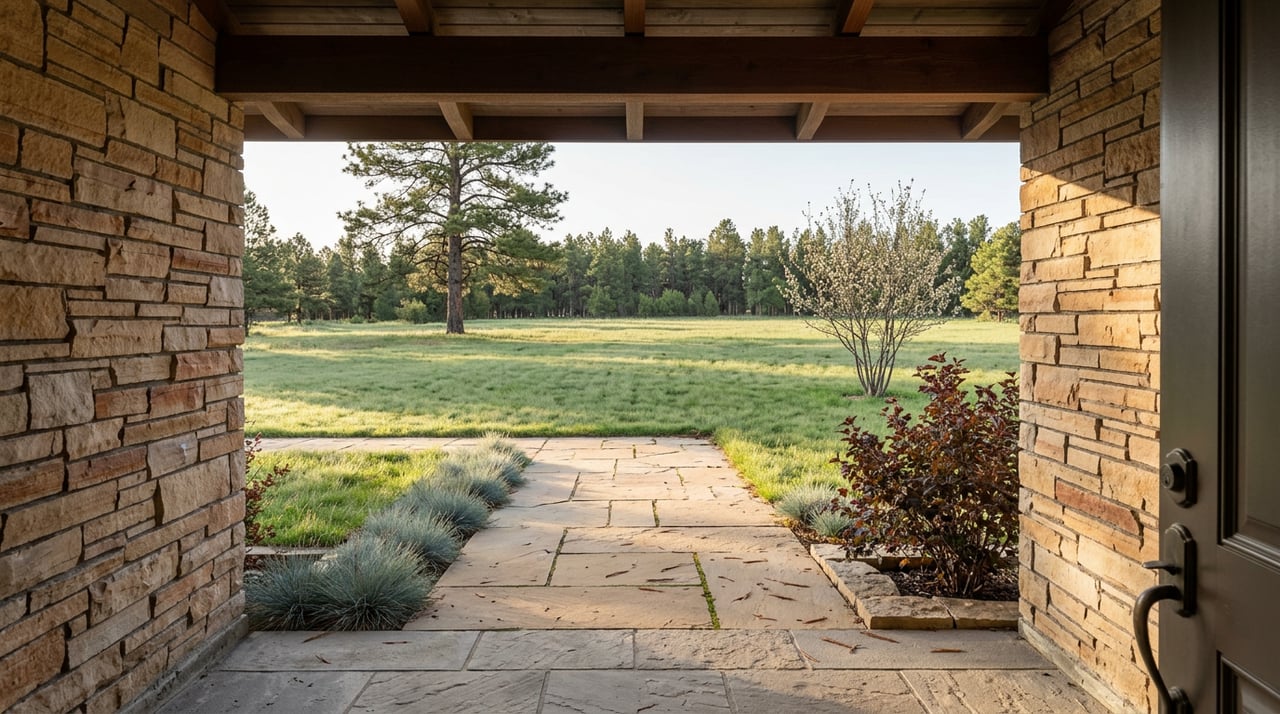
Almost every home in Black Forest runs on a private well and an onsite septic system rather than city water and sewer. That has always been part of the appeal, ponderosa pines instead of privacy fences, acreage instead of a shared lot line. But it also means the two systems that keep a house livable are things a listing price says nothing about. And according to the local group that tracks well data in the area, two wells only 200 feet apart can show completely different static water levels. Same road, same subdivision, same year built. Different water future entirely.
What Changed
Since January 1, 2015, El Paso County required a certified inspector to check a septic system before a property could change hands.
That doesn't erase a seller's legal obligation. According to KDS Homebuyers, Colorado's Seller's Property Disclosure form still requires an owner to answer truthfully about known defects, including septic problems.
Why the Well Was Always the Bigger Question Here
Septic systems fail in ways an inspector can catch: a rising tank level, a saturated drain field, a system that hasn't been pumped in years. Wells are a different kind of problem, because the thing that determines a well's future isn't visible at all. It's the geology underneath it.
Black Forest sits over the Denver Basin, a structural formation that stacks four separate aquifers on top of each other, the Dawson, Denver, Arapahoe, and Laramie-Fox Hills, from shallowest to deepest. Most Black Forest wells draw from the Dawson, the uppermost layer. The Dawson is confined by impermeable rock above and below it, which means almost no rain or snowmelt actually recharges it. What's down there took decades to accumulate and isn't being replaced on any timeline that matters to a homeowner.
There is no published data showing exactly how much water remains under any given Black Forest parcel. The only way to know how your specific well is doing is to measure it yourself, using the static water level recorded on your original well permit as the baseline.
That's not a hypothetical. It's the actual guidance from Black Forest Water and Wells, the local group that has spent years trying to get residents to track their own numbers, because no one else is going to do it for them.
The Numbers Behind the Uncertainty
A 2024 U.S. Geological Survey study of groundwater levels across El Paso County's Denver Basin aquifers found declines in all four layers, but not at the same rate. The Laramie-Fox Hills, the deepest, is dropping fastest at 9.9 feet per year. The Denver aquifer is declining at 3.2 feet per year. The Arapahoe, at 1.9 feet per year. Those numbers matter because they show the basin isn't behaving as one unit. It's four separate systems, each depleting on its own clock, and a well drilled into one layer tells you nothing about the layer next to it.
Black Forest adds another wrinkle. The community sits where the Dawson Formation, the layer most local wells tap, thins out toward its outcrop edge, transitioning from a thick water-bearing layer to nothing over less than 10 miles. Industry sources describe this as one of the more geologically unstable stretches in the region for that reason. At the same time, local well drillers who work the area report that Black Forest wells have held relatively steady compared to faster-declining spots like Castle Rock, because the Dawson happens to run thicker here than it does farther north. Both things are true at once, and the difference between them, for any single property, comes down to exactly where that parcel sits relative to where the formation starts to thin. That's the real explanation for why neighboring wells can diverge so sharply. It isn't chance. It's geology that changes over a few hundred feet.
Colorado's water law was built around an assumption that a well could pump down to nothing without anyone treating that as a crisis. According to Colorado Well Water, El Paso County adopted a stricter 300-year version of the same rule, and the Colorado Supreme Court upheld it. But the math doesn't change the fact that every water provider in the northern part of the county still says it needs more supply. At the same time, planned developments will add more wells to the area. Winsome, a planned community near Hodgen and Meridian roads, will add 143 lots each with its own Dawson well. Flying Horse North plans 283 more Dawson wells plus a golf course drawing from a separate Denver aquifer well. None of that water comes from outside the basin. The planned wells draw from different aquifers within the same basin.
What This Costs When It's Your Well, Not a District's
For an individual buyer, the practical numbers look like this. According to Murphy's Custom Homes, a well permit on a parcel smaller than 35 acres is typically capped at 15 gallons per minute for household use only, which limits what the property can support beyond basic indoor use. A well drilled into one of the deeper Denver Basin layers generally has a working life of 15 to 20 years before the pumping costs stop making economic sense, at which point the option is to lower the pump or drill a new well entirely, not to drill the existing one deeper. Septic costs run anywhere from roughly $8,000 to $40,000 or more in Colorado, and the number that actually decides where you land isn't lot size. It's soil. Rocky or poorly draining ground requires an engineered system that costs far more than a straightforward gravity-fed one on favorable soil.
There's also a detail worth knowing if you're weighing Black Forest against a neighborhood on municipal utilities: the Cherokee Metropolitan District operates four wells inside Black Forest, near Hodgen and Black Forest roads, drawing from the same aquifer system local homeowners depend on. That water goes to roughly 18,000 residents in southeast Colorado Springs. None of it returns to Black Forest.
Before You Write an Offer
- Pull the well permit and well log from the Colorado Division of Water Resources and note the recorded static water level from when the well was drilled.
- Ask the seller to measure current water depth, or arrange your own measurement, and compare it to that original baseline.
- Get an independent septic inspection.
- Ask which aquifer layer the well taps. A Dawson well and a Laramie-Fox Hills well on the same street are not the same asset.
- Request service history on the well pump and any septic maintenance or pumping records, since neither system comes with a public performance record the way a municipal utility does.
A Few Questions Worth Asking
How do I find out which aquifer a specific well taps? The well permit and well construction log, both available through the Colorado Division of Water Resources, list the aquifer and depth. That record exists for essentially every legally permitted well in the state.
Can two wells that close together really behave that differently? Yes, according to local water tracking groups in the area, and it comes down to the layered, uneven geology of the Denver Basin rather than anything about how the wells were built or maintained.
Black Forest still delivers something few other parts of the Pikes Peak region can, real acreage, real tree cover, and a kind of quiet that doesn't show up in a comparable sale. None of that changes the fact that the systems keeping a house running out there answer to geology, not to a listing agent. If you're comparing Black Forest against a neighborhood on municipal water and sewer, or you're trying to figure out what a specific well permit is actually telling you, The Daniels Team has spent decades working these micro-markets and can help you ask the right questions before you're under contract. Schedule a Free Consultation to talk through what a specific Black Forest property's well and septic history really means for your purchase.
This article is general information, not legal, tax or financial advice. Consult a qualified professional about your situation.